Showing posts with label books. Show all posts

Friday, April 29, 2011

Book Beginnings & Friday 56 -- My Reading Life by Pat Conroy

Book Beginnings on Friday is a meme hosted by A Few More Pages. Anyone can participate; just share the opening sentence, or two, of your current read, making sure that you include the title and author so others know what you're reading.

Between the ages of six and nine, I was a native son of the marine bases of Cherry Point and Camp Lejeune in the eastern coastal regions of North Carolina. 


The Friday 56 is a weekly meme hosted by Freda's Voice. Check out the rules and join in the fun.

Grab the book nearest you. Right now.
Turn to page 56.
Find the fifth sentence.
Post that sentence (plus one or two others if you like) along with these instructions on your blog or (if you do not have your own blog) in the comments section of this blog. Post a link along with your post back to this blog.
One Sunday after the community sing, a young Martin Luther King Jr. got up to preach a homily, and I heard the most electrifying speaker I had ever listened to.  His voice was an instrument of an immense and subtle power.  He spoke without notes, his voice botha spillage of honey and a quiet call to arms.


I'm vaguely aware of Conroy's books (The Great Santini, The Prince of Tides), but have never actually picked one up.  In My Reading Life, Conroy tells his life story through his reading experiences as well as his relationships with other readers and writers.  I think my un-enjoyment of this book came from the cavern of differences between Pat Conroy and I - sex, age, childhood, opinion about political correctness, etc.  It was okay, but I'm probably not his target audience.

Saturday, September 18, 2010

Friday 56: The Summer of the Great-Grandmother

From Storytime with Tonja and Friends

Rules:

* Grab the book nearest you. Right now.
* Turn to page 56.
* Find the fifth sentence.
* Post that sentence (plus one or two others if you like) along with these instructions on your blog or (if you do not have your own blog) in the comments section of this blog.
*Post a link along with your post back to this blog.
* Don't dig for your favorite book, the coolest, the most intellectual. Use the CLOSEST.


It was not just a bad headache; it was a cerebral hemorrhage, and Liz was dead before morning.  Liz died on the twenty-sixth of November.  The funeral was on the twenty-ninth:  my birthday. 
~The Summer of the Great-Grandmother by Madeleine L'Engle

I had this book sitting by the computer waiting to be reviewed -- with lots of little strips of paper sticking out where I found phrases or paragraphs I especially liked.  It's a work of non-fiction about the summer L'Engle's mother died.

My world is not the world of L'Engle's family -- children eating dinner separately, trips to the Continent, summer houses, hanging out with the Empress of France or General Custer, owning a house with a marble privy designed by Thomas Jefferson -- but nonetheless I can identify with some of her thoughts and experiences. 

L'Engle came to my college when I was a student there.  I attended her lecture, but remember very little -- mostly an image of a scarf -- so I guess it was winter -- but I don't know if it was her scarf, mine, or my friend Steve's.  I've read more of her writing in my last 15 years than I did in my first 20 and wish I had the opportunity to hear that lecture all over again -- I think it would mean something different to me now.

Some more snippets I wanted to share...

I realize, with a pang, how privileged we are to be able to keep my mother with us.  This is how it should be, but what would I do if we lived in a tiny home and did not have the girls and Clara to help?   . . .  And even though we have room, and the girls to help us, there are still those who think that my mother should be put away.  Put away.  Everything in me revolts at the idea.  But my belief that we are supposed to share all of life with each other, dying and decay as well as feasting and fun, is being put to the test. (p 28)

. . . I do not think that a house can be a happy house if no one has cried in it, if no one has died in it.  If this seems contradictory, I can't help it.  I rebel against death, yet I know that it is how I respond to death's inevitability that is going to make me less or more fully alive. (p 23-9)

I'm much more use to family and friends when I'm not physically and spiritually depleted than when I spend my energies as though they were unlimited.  They are not. (p 46-7)

The mother of my childhood and adolescence and very young womanhood existed for me solely as mother, and I suppose it is inescapable that for a long time we know our parents only as parents, that their separate identity as full persons in their own right unfolds only gradually, if at all. (p 88)

If I have to conform to provable literalism I not only rebel, I propose immediate revolution.  How do I make more than a fumbling attempt to explain that faith is not legislated, that it is not a small box which works twenty-four hours a day?  If I "believe"for two minutes once every month or so, I'm doing well. (p 142)

I prayed very badly in church yesterday.  I often pray badly when I try to say my prayers at home.  But if I stop going to church, no matter how mad church makes me, if I stop praying at home, no matter how futile it sometimes seems, then "real" prayer is never going to come.  (p 144)


Saturday, August 7, 2010

The Language of Bees by Laurie R. KIng

Stonehenge Stonehenge, Wiltshire. Stonehenge i...Image via Wikipedia
Another fun mystery in Laurie R. King's Mary Russell/Sherlock Holmes series.  In The Language of Bees, Russell and Holmes have returned to England after 7 months of traveling far and wide.  When they arrive at their country home in Sussex, Damien, Holmes' son, is waiting for them.  Holmes' had learned of his son's existence five years earlier upon the occasion of Damien's being accused of murder and he and Russell have not seen Damien since he was exonerated.

Damien's wife and child have disappeared and he has come to ask Holmes for help.  Meanwhile, Russell figures out why one of Holmes' hives has been abandoned and then heads to London herself to see what she can learn about Yolanda and Estelle's disappearance.

Stonehenge, Druids, details about beekeeping, London Bohemians, Aleister Crowley, the Wilmington Giant, aeroplanes, A Passage to India in the new fiction section at a bookstore -- what's not to love? Oh, and the ending makes me very glad that The God of the Hive is already out!

Monday, August 2, 2010

Locked Rooms by Laurie R. King

Cover of "Locked Rooms (Mary Russell Nove...
Laurie King is a clever, clever woman.  I love her Mary Russell/Sherlock Holmes series, of which Locked Rooms is the eighth.  It was a re-read for me before reading the ninth, The Language of Bees.


Russell and Holmes, after their escapades in India (The Game), head for San Francisco.  Mary hasn't returned to California since the accident that killed her parents and younger brother ten years earlier -- and left her alone in the world.  She is ready (she thinks) to take care of the legal matters related to her parents' estate and then put it all behind her.

As she and Holmes begin exploring San Francisco, however, her memories of her childhood become clearer while only creating even more questions.  Why doesn't she remember living in San Francisco during the earthquake?  What do her dreams -- of flying objects, a faceless man, and locked rooms only she is aware of -- signify and are they related to her return to the city where she lost her family? 

I love that King includes a meeting and eventual partnership between Holmes and Dashiell Hammett at the same time that she captures the spirit of San Francisco just 18 years after the 1906 earthquake.  I'm so glad I re-read this one before picking up The Language of Bees and I'm also glad that the next one, The God of the Hive is already out so I can pick it up soon!

Tuesday, July 27, 2010

The Red Pyramid by Rick Riordan


The Red Pyramid begins a new series by Rick Riordan -- the author of the now complete Percy Jackson series. The story's first-person POV alternates between Sadie and Carter Zane, siblings who have been living apart since their mother's death six years ago -- Sadie with her maternal grandparents in London and Carter traveling the world with his archaeologist father.  Each sibling is somewhat envious of the other's life.

On Christmas Eve, Carter and his father, Julius, arrive in London for one of their twice-a-year visits with Sadie. When a trip to the British Museum goes terribly, horribly wrong (think exploding Rosetta Stone and disappearing father) Sadie and Carter are thrust into an adventure that spans three continents and teaches them much about their heritage while they struggle to save their father, figure out who they can trust, and come to terms with their own powers.

What kept me coming back to the Percy Jackson series, in spite of the fact that its target audience is 4th grade boys (I'm a 34 year old woman) was the humor.  Somehow the brand of humor Riordan uses in the series is just my style.  I didn't feel the same connection with the humor in The Red Pyramid and I'm not sure why.

Throughout the book I found myself flipping back because there was something I didn't remember or missed the first time.  I'm not sure if this was due to my lack of knowledge about Egyptian gods and history, the distractions in my life, or actual flaws in the narrative.   At one point Carter and Sadie are told that no one can cross a certain bridge without meeting a challenge and that the challenge is different for each person.  And yet, in the following pages, only Carter is challenged and the rest of their party just sort of follows in his wake.  I'm not sure if I just missed something here or if it is a true inconsistency. 

While unrelated to the main plotline, I appreciated the way that Riordan incorporates Carter's experiences as a dark-skinned youth into the book in a very natural way -- experiences such as being carefully watched by shopkeepers and police officers and being told that he needs to always be just that much more neatly dressed in order to prove himself.  Opening up this subject for discussion is always a positive thing, in my opinion.

My favorite turn of phrase?  When Carter is describing the rarity of an equal partnership between a god and a human he says it's "like the one time when the coin doesn't land heads or tails, but stands on its edge, perfectly balance" (p.457 in the hardcover).

Riordan does a good job of putting in little details to remind us that Sadie and Carter have spent the last six years in very different places -- British terminology, Carter's lack of friends his own age, etc.  I also appreciated a few twists at the end -- a showing of mercy, a stunt double, the return of . . . well, I should probably leave that for you to find out.  :)

Here's another review -- I waited to read it til I was finished with mine.


Monday, July 26, 2010

It's Monday, July 26, 2010 -- What are you reading?

It's Monday, what are you reading? is hosted by Sheila at Book Journey. It is a chance for us to share with other book bloggers what we have just finished reading, what we are currently reading and what we are reading next.

Just finished:
  • Word after Word after Word by Patricia MacLachlan
Sweet, short juvenile novel about an author who visits a fourth grade class. From the book flap:
. . . an honest, inspiring story about what is real and what is unreal, and about the ways that writing can change our lives and connect us to our own stories -- word after word after word.

Currently Reading:
  • The Accidental Billionaires:  The Founding of Facebook -- A Tale of Sex, Money, Genius, and Betrayal by Ben Mezrich  (Who knew they were making a movie?)
  • The Cookbook Collector by Allegra Goodman

Up Next:
  • Don't Know Where, Don't Know When by Annette Laing
  • All Other Nights by Dara Horn

Tuesday, July 20, 2010

Teaser Tuesdays -- Someone to Kill and Eat

Teaser Tuesdays is a weekly bookish meme, hosted by MizB of Should Be Reading. Anyone can play along!

* Grab your current read.
* Let the book fall open to a random page.
* Share with us any two (2) "teaser" sentences from that page.
* You also need to share the title of the book that you're getting your "teaser" from... that way people can have some great book recommendations if they like the teaser you've given!


In 2003, Armin Meiwes, a 42-year-old computer expert, went online looking for someone to kill and eat.  After several interviews, he chose Bernd Brandes.
~p 25, How Pleasure Works: The New Science of Why We Like What We Like by Paul Bloom

This book was interesting but not rave-worthy for me. 


Monday, July 19, 2010

It's Monday, July 19, 2010 -- What Are You Reading?

It's Monday, what are you reading? is now hosted by Sheila at Book Journey. It is a chance for us to share with other book bloggers what we have just finished reading, what we are currently reading and what we are reading next.
 
Just finished:
Currently Reading:
  • How Pleasure Works:  The New Science of Why We Like What We Like by Paul Bloom (see tomorrow's post)
  • The Red Pyramid by Rick Riordan 
  • The Accidental Billionaires:  The Founding of Facebook -- A Tale of Sex, Money, Genius, and Betrayal by Ben Mezrich

Up Next:

Enhanced by Zemanta

Saturday, July 17, 2010

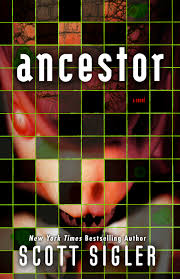
Ancestor by Scott Sigler

Hm.  Ancestor by Scott Sigler definitely falls into the airport fiction category for me.  That is what I call anything that I could see sitting in the front at an airport bookstore -- high action & suspense, simple, page-turning fluff.  Which is fine with me -- though I have a friend or two who might disagree, I think everyone needs the occasional fluff.  If there was one aspect of the book that might slightly rescue it from the airport fiction genre, it would be the theme of science gone wrong/where should scientists draw the line with their research and experiments.

So my basic first reaction to Ancestor was, as I told my husband, "It's like Jurassic Park with way more human to human violence and some pretty misogynistic attitudes and abhorrent behaviors towards women".  Though I haven't actually read Jurassic Park, only seen the movie, so I'm not sure how accurate that comparison is.

My more positive thoughts?  Sigler did a great job of creating a diverse set of characters -- each character was unique and it was easy to remember who was who -- not always the case with a page-turning thriller full of many characters.  I also enjoyed the running commentary from one of the older characters about all the famous people he knew "back in the day" (ie, "Charlie" Heston, Jack Kerouac, and Marilyn Monroe) and the portrayals of Michiganders in general.

I will also admit to being amused by the same character's response after being asked the whereabouts of another person on the island, ""Did you look up your asshole?  Oh wait, your head is already there, so you'd have seen her by now."

The book opens with Paul Fischer, a colonel in the Army working with infectious disease.  I expected him to reappear at the end and he never did -- which felt like a loose end left untied.

So in general, it was an interesting airport fiction storyline that I enjoyed in some ways, but the numerous men with hideous attitudes toward women was a pretty big distraction that, for me, took away from my enjoyment of the story.

Tuesday, July 13, 2010

Teaser Tuesdays -- AKA Dan Ariely rocks

Teaser Tuesdays is a weekly meme hosted by Miz B of Should Be Reading and asks you to :


1. Grab your current read

2. Open to a random page

3 . Share 2 "teaser" sentences also citing the title of the book and the author and in that way people can have great recommendations if they like the "teaser".

4. Please avoid spoilers!

 "Could all this mean that sometimes we might actually behave less rationally when we try harder?  If that's so, what is the correct way to pay people without overstressing them? "
p. 51, The Upside of Irrationality by Dan Ariely


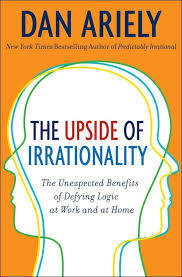
The Upside of Irrationality: The Unexpected Benefits of Defying Logic at Work and at Home by Dan Ariely

First off, you should all know that I adore Dan Ariely. His first book, Predictably Irrational: The Hidden Forces That Shape Our Decisions, totally rocked my world.  Ariely is a behavioral economist who teaches at Duke. One should be able to read a book on behavioral economics in bed without laughing and/or snorting aloud while needing to say to your family members every five minutes,"Okay, I know the light is out, I'm reading with a flashlight, and your eyes are closed, but just listen to this part."  Do not expect to be able to do this with any book written by Dan Ariely.  After reading Predictably Irrational I decided that if I ever went back to school I'd get a degree in behavioral economics this time. I don't know if I could really hack it or not, but Dan Ariely makes the entire field absolutely fascinating!


I knew very little about behavioral economics before encountering Ariely's work. In his words, behavioral economists "don't assume that people are perfectly sensible, calculating machines. Instead, we observe how people actually behave, and quite often our observations lead us to the conclusion that human beings are irrational" (page 6). Ariely adds that the goal of behavioral economics is "to try to understand the way we really operate so we can more readily observe our biases, be more aware of their influences on us, and hopefully make better decisions" (page 9).

Ariely includes an interesting side-bar about what motivates people to blog that would interest my fellow bloggers.  I certainly agree that I love to read comments on my own blog and I've heard many of you say the same.

I could clearly gush about this book forever.  I'll let you all admire my restraint as I simply say that if you are in the market for a new non-fiction read, this is it!

Monday, July 12, 2010

It's Monday, July 12, 2010! What are you reading?

What Are You Reading? is a weekly meme hosted by Sheila over at Book Journey where bloggers gather to share what we have read this past week and what we plan to read this week.  
I gave up on:
  • The Man from Beijing by Henning Mankell
  
I finished:
  • The Red Thread: A Novel by Ann Hood
  • The Upside of Irrationality: The Unexpected Benefits of Defying Logic at Work and Home by Dan Ariely (see tomorrow's post for my gushing)
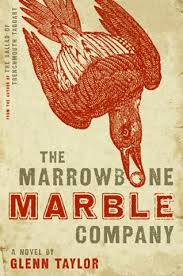
  • The Marrowbone Marble Company by Glenn Taylor (short quote coming later this week)

I am currently reading: 
  •  Kindred by Octavia Butler (book club book for August and I'm already quite sucked in)
  • Ancestor by Scott Sigler
Next up:
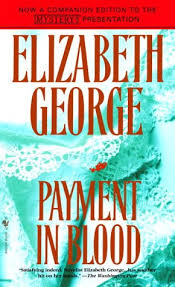
  • Payment in Blood  by Elizabeth George
  • The Accidental Billionaires:  The Founding of Facebook -- A Tale of Sex, Money, Genius, and Betrayal by Ben Mezrich

Saturday, July 10, 2010

Out of My Mind by Sharon M. Draper

Just excellent.  Sharon M. Draper (author of Copper Sun, also excellent) has created a memorable character in her latest juvenile novel, Out of My Mind.  Meet Melody Brooks, an incredibly smart almost-eleven-year-old with an enormous vocabulary and a lot to say -- with no way to say it.  Melody has cerebral palsy.  She struggles with her inability to express herself and Draper does a great job of portraying how heartbreaking this is -- for example, when Melody says she's never been able to tell her parents she loves them.  When she gets a new machine that helps her communicate, many aspects of her world change, but she still has to contend with the way others think about and treat her.

Good stuff.  The entire book is first person and very believable.

Wednesday, July 7, 2010

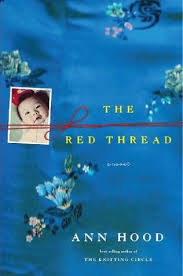
The Red Thread by Ann Hood

The Red Thread by Ann Hood

I'd never read anything by this author before.  (Her other books include Comfort, The Knitting Circle, and Do Not Go Gentle.)  Maya Lange, the main character, runs an adoption agency that specializes in placing children from China with family from the United States. 

The book alternates between many points of view -- each prospective parent, Maya, and the parents in China who have given up their daughters.  It was certainly interesting how many different motivations there can be for the same desire -- that of wanting a baby to call your own. 

I've often thought about the irrationality of guilt, especially when related to one's own child.  Maya's own baby daughter died several years ago after falling from Maya's arms to the floor.  Maya struggles with guilt and with allowing herself to love again.  As a parent, the thought of my child dying because of something I'd done or hadn't done is crushing and I can understand that the fact that it was an accident would not take the guilt away.

In the acknowledgements the author briefly shares her own family's experience adopting a daughter from China.  I would be interested to hear what parents who have adopted, whether domestically, from another country, or from China specifically, think of this book.

Monday, July 5, 2010

It's Monday, what are you reading?

What Are You Reading? is a weekly meme hosted by Sheila over at Book Journey where bloggers gather to share what we have read this past week and what we plan to read this week.   
I gave up on:
  • A Visit from the Goon Squad by Jennifer Egan
  • Backseat Saints by Joshilyn Jackson
I finished:
I am currently reading: 
  • The Red Thread: A Novel by Ann Hood (enjoying this)
  • The Upside of Irrationality: The Unexpected Benefits of Defying Logic at Work and Home by Dan Ariely  (I LOVED his first book and am so looking forward to this one.)
Next up: 
  • The Marrowbone Marble Company by Glenn Taylor (no idea what this one will be like)

Sunday, July 4, 2010

The Conscious Kitchen by Alexandra Zissu

The Conscious Kitchen: the New Way to Buy and Cook Food -- to Protect the Earth, Improve your Health, and Eat Deliciously by Alexandra Zissu

This is a short little book (barely 200 pages) with all kinds of practical ideas and advice.  Pick it up soon -- you won't be disappointed.

Zissu begins the book with her ten "Conscious Commandments . . . ten easy things you can do. . .  to move toward having a more conscious kitchen" (I'm just sharing the bare bones of these commandments -- for the full scoop, get your hands on the book!):

  1. Eat less meat.
  2. Just say no to bottled water.
  3. Buy local organic or sustainably farmed fruits and vegetables.
  4. Eat only the least contaminated sustainably harvested wild or well-sourced farmed seafood.
  5. Always consider packaging when shopping.
  6. Cook at home.
  7. Avoid plastic as often as you can.
  8. Try composting, even if you live in a city or a house without a yard.
  9. Whenever possible, reduce energy use in the kitchen by choosing efficient appliances, cooking methods, and dishwashing practices; don't leave appliances plugged in when not in use; ask your electric company for alternative energy sources like wind power.
  10. Spread the word. [guess that's what I'm doing here!)
I already try to do a fair bit of this.  I'd like to be more conscious of packaging while food shopping and I'd also like to figure out the best way for our family to start composting!  If you are reading this, feel free to check back in and keep me accountable.  ;)


A few other facts, ideas, and resources to get you started:
  • PLU (price look-up -- on the stickers on produce) codes begin with nine and have five digits if the product is organic, begin with four and have four digits if conventional.  Genetically modified PLUs should start with eight and have 5 digits.
  • Google "Great Pacific Garbage Patch"
  • www.pickyourown.org
  • www.localharvest.org
  • www.dinegreen.com
  • www.oceansalive.org and www.blueocean.org (both for information about buying and eating fish
  • Use loose-leaf teas in a French press -- saves packaging!
  • Some cities provide free tests for you to test your own tap water.  (Something else I should probably do and that you all should bug me about.  :))
  • Decaf coffee is usually made by soaking beans in solvents -- including one that is a paint stripper.  If you'd like to avoid this in your decaf, look for beans that have been CO2 or water processed instead.
  • Zissu highly recommends cooking with cast-iron and includes detailed instructions for seasoning your cast-iron pots and pans.
  • Put a dollar in your fridge door and shut the door -- if the dollar falls out or you can feel cold air coming out, the seal is not tight enough.  You can buy a replacement seal at the hardware store and install it yourself.
This is just a sampling -- The Conscious Kitchen is an important book -- I got it from my library and you can too!

Tuesday, June 29, 2010

Teaser Tuesdays -- Finding Magic for Crow

The rules come from MizB of Should Be Reading.
  • Grab your current read
  • Open to a random page
  • Share two (2) "teaser" sentences from somewhere on that page
  • BE CAREFUL NOT TO INCLUDE SPOILERS! (make sure that what you share doesn't give too much away! You don't want to ruin the book for others!)
  • Share the title & author, too, so that other TT participants can add the book to their TBR Lists if they like your teasers!
Don't you feel it?  I just know we'll find your magic today!

~p. 103, Magic in the Alley by Mary Calhoun
My daughter and I were gifted this book by a fellow participant in the 48 hour reading challenge.  Thanks, Wendy!


    Friday, June 25, 2010

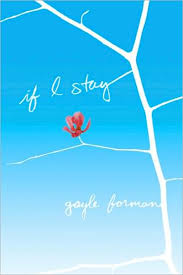
    If I Stay by Gayle Forman

    If I Stay by Gayle Forman

    Read this for the YALSA (Young Adult Library Services Association) challenge over at Tattooed Books.  It's pretty short (196 pages).  Seventeen-year-old Mia is in a car accident -- her mother, father, and younger brother are all killed and she is in a coma, but can watch what is happening. She has to decide if she wants to stay with all the goodness that is still in her life (grandparents, boyfriend & best friend, a love for music) or let herself die because of how hard she knows it will be to go on without her family.

    I have a feeling that the story line requires too much (un)willing suspension of disbelief for some readers, but I was up for it and liked it.  Who else has read this one?

    Wednesday, June 2, 2010

    Learning at Home: A Mother's Guide to Homeschooling by Marty Layne --Take V

    While I don't have much to say about chapter 3 (about reading), I definitely appreciate Layne's laid-back approach to the subject.
    A poem from chapter 4 (about writing) describes Layne's approach to homeschooling and, I think, to life in general.

    T.T.T.
    Put up in a place 
    where it's easy to see
    the cryptic admonishment 
    T.T.T.

    When you feel how depressingly
    slow you climb,
    it's well to remember that
    Things Take Time.
    ~by Piet Hein from his book Grooks

    Layne goes on to say that "competency in the techniques of writing come with practice and interest" (p. 94).  My  six-year-old daughter has been reading for quite a while now and can read most anything but has not spent a lot of time writing.  She recognizes all the letters and pretty much gets their sounds, but is not, at this point, drawn to writing in the same was as she is drawn to reading.  It's been interesting to observe the way that these skills manifest themselves in other children -- children, for example, who write words, sentences, and paragraphs easily and often but who don't do a lot of reading on their own or with others.  Perhaps this is just more proof that human beings learn at different rates and we all just need to chill the freak out.  ;)   Surround children with print, immerse them in it and then sit back and give them the space to explore.

    Layne says, 
    I would often answer the question "How do you spell such and such a word?" with a question of my own "How do you think it is spelled?" until I was told that this was not an acceptable answer.  Josh told me that when he asked it didn't mean that he hadn't thought of how the word was spelled, he just wanted an answer.   Now I answer the question about how to spell a word by giving the spelling and bite my tongue to stop my first response of wanting to ask how the person thinks it is spelled.  I remind myself that my children want an impersonal and immediate response like my word processor's spell check function.
     This is a realization that I've come to recently as well. As a college student in the elementary education program, I learned about the value of inventive spelling.  I still believe that inventive spelling can give children the freedom to concentrate on what they are trying to express rather than on the mechanics of spelling.  But I think the choice to use inventive spelling belongs to the child -- indeed, an insistence, on the part of the adult, that the child use inventive spelling takes away that very freedom that inventive spelling would otherwise give.  There are times when Fiona writes on her own without asking for certain words to be spelled and there are other times when she simply wants each word she is writing to be "right" -- both are completely acceptable ways of writing.

    Layne finishes chapter 4 by discussing Mad Libs, cursive vs. print, and two forms of poetry that are good for beginning poets to use.

    Chapter 5 (math) is full of resources and ideas, including a list of games that build and strengthen the framework needed for mathematics ("...so much more than computation.  It is a way of perceiving and defining the world." p 114).  It has prompted me to want to start playing cribbage with Fiona.

    Some bullet points from chapter 6 (the arts):
    • "what is important is exposing your child to various artistic modes of expression not whether or not he or she becomes a star" p. 120
    • visit a music store just for fun, to look around
    • go to concerts!
    • artists to check out: Tom Chapin, Tom Paxton, Malvina Reynolds, The Travellers
    • dance with your kids
    • draw with your children -- try still lifes
    Chapter 7 -- Life as Curriculum -- Science and Social Studies
    • teach your child how to find non-fiction books in the library -- especially for those subjects that especially interest them -- For as much as we go to the library, this is not something we've done with Fiona and I want to remember to do so this summer. 
    All quotes from Learning at Home used with author's permission:   www.martylayne.com


      Tuesday, June 1, 2010

      Learning at Home: A Mother's Guide to Homeschooling by Marty Layne --Take IV -- Learning Environment

      So I wrote several long posts about this book at the beginning of May.  I'm now returning to see if I have more to say (you'd think one would know such things, wouldn't you?).   Sadly, I've lost a page of notes in the interim.  So vamos a ver.

      I left off at the end of most of the more philosophical part of the book -- the rest is more concrete -- environment, curriculum, resource kinds of stuff.  The notes I lost were largely a list of books, supplies, games, etc, that I wanted to keep in mind.  Some bullet points:

      • Play is the work of childhood.

      • How Tom Beat Captain Najork and His Hired Sportsmen by Russell Hoban -- I've got this picture book on hold at the library -- Layne says it "captures the essence of homeschooling" and, from her description, I would say unschooling even more so!  Supports the idea that children need time and opportunity to play and explore, to fool around with things -- and that there is just as much value in that, if not more, than more formalized learning.

      • Talking of toys with small pieces (e.g. Lego) and siblings of varied ages she says, "It is important for a baby not to be endangered by small objects within his grasp.  It is equally important for older children to know that their creations will not be destroyed."

      • "We cannot make our children's lives risk free.  As our children grow older, they will reach out to the world in all kinds of ways.  We cannot prevent hurt, anguish, betrayal, and/or pain.  We can be there beside our children when this occurs, validating their negative feelings as well as their positive ones and support them as they come to grips with less than ideal situations." p.57
      • "Imagine for a moment that someone who is a friend of a friend of yours comes over to visit and starts using your kitchen cooking equipment or your sewing machine.  It would feel like an invasion of your privacy and boundaries.  Asking children to share their toys or belongings with other children is similar.  Children will learn generosity better by the ways in which their parents demonstrate generosity than by being told to share their toys." p. 66 -- I like this a lot, it's a concept I've encountered before and really believe in.  Sometimes when we have friends coming over, I ask Fiona what things she'd like to put away before people arrive.  Sometimes I think that this is somehow encouraging a "what do you want to not let your friends touch or look at" kind of attitude.  Whenever that thought crosses my mind, I remind myself that there are certainly things that *I* sometimes put things away when I know others are coming over as well -- including breakable things or items that are very special to me.  If I think about it that way then it seems like a wonderful thing for Fiona to learn -- what things to put away to avoid anger or disappointment or hurt feelings later on.
      • I'll be listing some (I'll largely try to stick with those that seemed unique) of the concrete ideas of supplies/resources that Layne shares -- she lists lots, but stresses that things can be acquired over time, second-hand, and as gifts.
      • colored pencils
      • beads, fabric scraps, ribbons, buttons
      • glue sticks --tend to be easier for young children to use
      • beeswax for modeling (I've been wanting some of this for a while now!)
      • Sculpey (she likes it better than Fimo)
      • good quality blank paper -- she suggests asking printers for offcuts -- I'd like to do this but haven't yet
      • lots of different kinds of balls
      • bicycle & helmet
      • wooden spools & beads make good additions to a block set
      • jigsaw puzzles -- start simple and increase the number of pieces -- for the author's family, 250 piece puzzles were nice because they are fairly quick but still challenging
      • plastic animals -- my daughter especially likes small figurines that she can play with at home and take with her easily
      • tools, kitchen tools, sewing machine
      • "Recognizing the importance of play, encouraging children to play by creating an environment in which play can take place means trusting that children are inherently good and want to become competent in the world.  It means trusting the natural progression of their abilities and their desire for more understanding and knowledge."  With this quote, I've finished with Chapter Two.
      All quotes from Learning at Home used with author's permission:   www.martylayne.com

        Sunday, May 30, 2010

        Challenge from Tattooed Books -- YALSA nominees

        Over at Tattooed Books there is a very tempting challenge --
        Every year, YALSA (the Young Adult Library Services Association) polls 15 book clubs around the country about what books they think should make the list of the best teen books published in the last year. This year there are 26 nominees that teens (12-18) can vote on between August 23rd and September 17th. The Teen's Top Ten choices are announced during Teen Read Week in October. This year's theme for Teen Read Week is "Books with Beat."If you want more information on any of these events, please visit the YALSA website.  

        There are 3 different levels to the challenge.
        Solo:  1-8 books
        Duet:  9-17 books
        Three-Part Harmony: 18-26 books

        I've already read:
        Cashore, Kristin. Fire
        Collins, Suzanne. Catching Fire
        Fisher, Catherine. Incarceron
        Fitzpatrick, Becca. hush, hush
        Stiefvater, Maggie. Shiver
        Westerfeld, Scott. Leviathan 
        Red -- don't read.  Purple -- must read.  Black -- hard to say.


        I think I'd like to read:
        Carter, Ally. Heist Society
        Anderson, Laurie Halse. Wintergirls
        Dessen, Sarah. Along for the Ride
        Forman, Gayle. If I Stay
        Clayton, Emma. The Roar
        Tanigawa, Nagaru. The Melancholy of Haruhi Suzumiya      


         So I guess that means I'm aiming for the Duet level!  Sadly, my library account is currently full of holds so I'll have to wait to start getting this list on hold til Tuesday when I go and pick up the holds that are waiting for me!