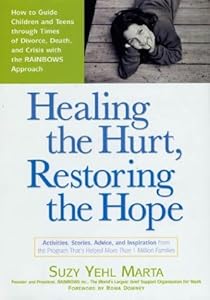
Healing the Hurt, Restoring the Hope: How to Guide Children and Teens through Times of Divorce, Death, and Crisis with the RAINBOWS Approach by Suzy Yehl Marta
Chapter 8 -- Heartfelt Conversations
". . . talking about the loss event is crucial to the four stepping stones of healing . . . As children are able to release their pent-up grief emotions and express them out loud, they are finally able to begin sorting through the pieces of their loss. It is only then that they can reassemble their worlds. The process is similar to doing a jigsaw puzzle . . . You opened the box, dumped out the pieces, turned them all over, and sorted through them. Only after you were able to evaluate all the pieces and arrange them in some kind of order were you able to put together the picture. Grief is the same way." (192)
Marta encourages compassionate companions, those who are walking alongside the child, not to give up, that it may take a while for the child to share what's inside -- but to persist, gently, and be patient. "If, after a few nudges, the child doesn't seem to want to talk about the loss, let go of the topic. Instead, engage him in conversation about the news, sports, movies -- any subject that interests him. A grieving child cannot flip the 'on' switch and discuss a painful loss just because you are ready to talk about the event. Later, on a different occasion, reach out to him again." (198) She also recommends avoiding "why" questions because they ask the child to defend or explain his/her feelings. Rather, she suggests, ask questions like, "Could you describe the events that caused you to feel this way?" (194)
Three messages a compassionate companion wants to communicate to a grieving child:
- You exist.
- You are worthwhile.
- What you feel, fear, and know is important -- and important to me. (202)
Marta suggests making time to interact with your child creatively -- caring for dolls, telling stories, role-playing -- "Remember, if play is the work of childhood and grief is work, then given the opportunity, a child will grieve through play." (207) Children and teens can make a sculpture of their loss, draw their thoughts and feelings, create music.
This chapter is full of tips and ideas for how best to talk with children about their loss -- including how not to talk! The main point of the chapter? "Once their emotions and concerns are acknowledged, the children can begin to do the work that grief requires." (212)


No comments:
Post a Comment
Comments are a good way to brighten my day! Feel free to leave your name along with your thoughts.